Series: MAY 2015

Search 500 + past questions and counting.
  • Filter by Professional Bodies

  • Filter by Subject

  • Filter by Series

  • Filter by Topics

  • Filter by Levels

  • Filter by Professional Bodies

  • Filter by Subject

  • Filter by Series

  • Filter by Topics

  • Filter by Levels

BMF – May 2015 – L1 – SB – Q6 – Basics of Business Finance and Financial Markets

Describe the Boston Consulting Group (BCG) matrix used for business portfolio management.

Describe the Boston Consulting Group (BCG) matrix.

The Boston Consulting Group (BCG) matrix is a model by which businesses are
classified in relation to market growth and relative market share.
The strategy of each business is determined on the basis of the following factors:
(i) The growth rate of its market
(ii) The market share it enjoys

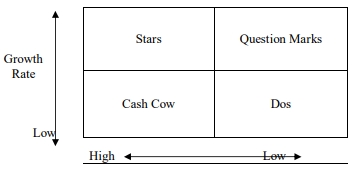
The matrix can be depicted by the following quadrant:

b. Product-Market Strategies:

i. Stars:
Stars operate in high-growth markets and dominate their sectors. They require substantial investment to maintain market position but promise high returns. The recommended product-market strategy is to continue heavy investment in advertising, promotion, and product development to ensure growth in market share and revenue.

ii. Question Marks (Problem Children):
These products operate in high-growth markets but have low market share. They create opportunities for long-term growth but need significant cash investments. The suggested strategy is to either invest heavily to turn them into stars or divest if the market position does not improve. This may involve strategic decisions like harvesting or liquidation.

iii. Cash Cows:
These products have high market share in low-growth markets. They generate consistent cash flows but offer limited growth opportunities. The strategy is to maintain or consolidate their position, using their revenue to fund other areas of the business that require investment (such as Stars or Question Marks).

iv. Dogs:
Dogs have low market share in low-growth markets, providing little to no profit potential. The strategy is often to divest or liquidate these products, as they are not worth the continued investment given their bleak future.

c. Weaknesses of the BCG Matrix:

  1. The model ignores the synergies between different business units, which can affect overall profitability.
  2. High market share does not always guarantee profitability, as it depends on other factors such as cost structure and competitive advantage.

Login or create a free account to see answers

Complete your registration to see answers

Find Related Questions by Tags, levels, etc.

Report an error

You're reporting an error for "BMF – May 2015 – L1 – SB – Q6 – Basics of Business Finance and Financial Markets"

BMF – May 2015 – L1 – SB – Q6 – Basics of Business Finance and Financial Markets

Describe the Boston Consulting Group (BCG) matrix used for business portfolio management.

Describe the Boston Consulting Group (BCG) matrix.

The Boston Consulting Group (BCG) matrix is a model by which businesses are
classified in relation to market growth and relative market share.
The strategy of each business is determined on the basis of the following factors:
(i) The growth rate of its market
(ii) The market share it enjoys

The matrix can be depicted by the following quadrant:
b. Product-Market Strategies:

i. Stars:
Stars operate in high-growth markets and dominate their sectors. They require substantial investment to maintain market position but promise high returns. The recommended product-market strategy is to continue heavy investment in advertising, promotion, and product development to ensure growth in market share and revenue.

ii. Question Marks (Problem Children):
These products operate in high-growth markets but have low market share. They create opportunities for long-term growth but need significant cash investments. The suggested strategy is to either invest heavily to turn them into stars or divest if the market position does not improve. This may involve strategic decisions like harvesting or liquidation.

iii. Cash Cows:
These products have high market share in low-growth markets. They generate consistent cash flows but offer limited growth opportunities. The strategy is to maintain or consolidate their position, using their revenue to fund other areas of the business that require investment (such as Stars or Question Marks).

iv. Dogs:
Dogs have low market share in low-growth markets, providing little to no profit potential. The strategy is often to divest or liquidate these products, as they are not worth the continued investment given their bleak future.

c. Weaknesses of the BCG Matrix:

  1. The model ignores the synergies between different business units, which can affect overall profitability.
  2. High market share does not always guarantee profitability, as it depends on other factors such as cost structure and competitive advantage.

Login or create a free account to see answers

Complete your registration to see answers

Find Related Questions by Tags, levels, etc.

Report an error

You're reporting an error for "BMF – May 2015 – L1 – SB – Q6 – Basics of Business Finance and Financial Markets"

BMF – May 2015 – L1 – SB – Q5b – Management, Individual, and Organisational Behaviour

Discuss hygiene factors and motivators in Herzberg’s two-factor theory.

Write briefly on the following:
i. Hygiene factors
ii. Motivators

i. Hygiene Factors: These are factors that can lead to dissatisfaction in the workplace if they are absent or inadequate, but their presence does not necessarily create satisfaction. They include aspects like working conditions, salary, company policies, job security, and relationships with supervisors and colleagues. Inadequate hygiene factors result in employee dissatisfaction, but improving these factors alone will not boost job satisfaction.

ii. Motivators: These are factors that positively influence job satisfaction and encourage employees to improve performance. They include recognition, responsibility, opportunities for advancement, achievement, and personal growth. Unlike hygiene factors, motivators directly impact an employee’s level of job satisfaction and contribute to higher levels of performance and motivation.

Login or create a free account to see answers

Complete your registration to see answers

Find Related Questions by Tags, levels, etc.

Report an error

You're reporting an error for "BMF – May 2015 – L1 – SB – Q5b – Management, Individual, and Organisational Behaviour"

BMF – May 2015 – L1 – SB – Q5b – Management, Individual, and Organisational Behaviour

Discuss hygiene factors and motivators in Herzberg’s two-factor theory.

Write briefly on the following:
i. Hygiene factors
ii. Motivators

i. Hygiene Factors: These are factors that can lead to dissatisfaction in the workplace if they are absent or inadequate, but their presence does not necessarily create satisfaction. They include aspects like working conditions, salary, company policies, job security, and relationships with supervisors and colleagues. Inadequate hygiene factors result in employee dissatisfaction, but improving these factors alone will not boost job satisfaction.

ii. Motivators: These are factors that positively influence job satisfaction and encourage employees to improve performance. They include recognition, responsibility, opportunities for advancement, achievement, and personal growth. Unlike hygiene factors, motivators directly impact an employee’s level of job satisfaction and contribute to higher levels of performance and motivation.

Login or create a free account to see answers

Complete your registration to see answers

Find Related Questions by Tags, levels, etc.

Report an error

You're reporting an error for "BMF – May 2015 – L1 – SB – Q5b – Management, Individual, and Organisational Behaviour"

BMF – May 2015 – L1 – SB – Q5a – Management, Individual, and Organisational Behaviour

List and explain the five levels of human needs as per Maslow’s hierarchy.

List and explain the FIVE general types of human needs in ascending order.

  1. Physiological Needs: These are the basic survival needs for human life, such as food, water, shelter, air, and clothing. In an organizational context, these are equated to adequate salary, heat, and air to ensure employees’ survival and well-being.
  2. Safety Needs: Once physiological needs are met, individuals seek protection and security, both physically and psychologically. In the workplace, this relates to job security, safe working conditions, and a stable environment free from physical harm.
  3. Belongingness/Social Needs: After safety, individuals look for social connections, love, and belonging. In an organization, this refers to forming relationships with colleagues and feeling accepted as part of a team. Employees value a friendly work environment and camaraderie among coworkers.
  4. Esteem Needs: These involve the need for recognition, respect, and self-esteem. Employees strive to achieve recognition for their work, which can be fulfilled through awards, promotions, or being acknowledged as valuable team members.
  5. Self-Actualization Needs: The highest level, where individuals strive to realize their full potential. In the workplace, this involves opportunities for personal growth, creativity, and achieving career goals. Managers can help employees meet these needs by providing challenging tasks and encouraging innovation.

Login or create a free account to see answers

Complete your registration to see answers

Find Related Questions by Tags, levels, etc.

Report an error

You're reporting an error for "BMF – May 2015 – L1 – SB – Q5a – Management, Individual, and Organisational Behaviour"

BMF – May 2015 – L1 – SB – Q5a – Management, Individual, and Organisational Behaviour

List and explain the five levels of human needs as per Maslow’s hierarchy.

List and explain the FIVE general types of human needs in ascending order.

  1. Physiological Needs: These are the basic survival needs for human life, such as food, water, shelter, air, and clothing. In an organizational context, these are equated to adequate salary, heat, and air to ensure employees’ survival and well-being.
  2. Safety Needs: Once physiological needs are met, individuals seek protection and security, both physically and psychologically. In the workplace, this relates to job security, safe working conditions, and a stable environment free from physical harm.
  3. Belongingness/Social Needs: After safety, individuals look for social connections, love, and belonging. In an organization, this refers to forming relationships with colleagues and feeling accepted as part of a team. Employees value a friendly work environment and camaraderie among coworkers.
  4. Esteem Needs: These involve the need for recognition, respect, and self-esteem. Employees strive to achieve recognition for their work, which can be fulfilled through awards, promotions, or being acknowledged as valuable team members.
  5. Self-Actualization Needs: The highest level, where individuals strive to realize their full potential. In the workplace, this involves opportunities for personal growth, creativity, and achieving career goals. Managers can help employees meet these needs by providing challenging tasks and encouraging innovation.

Login or create a free account to see answers

Complete your registration to see answers

Find Related Questions by Tags, levels, etc.

Report an error

You're reporting an error for "BMF – May 2015 – L1 – SB – Q5a – Management, Individual, and Organisational Behaviour"

BMF – May 2015 – L1 – SB – Q4 – Basics of Business Finance and Financial Markets

Discuss major cash flow items in capital investment projects and explain the payback period investment appraisal method.

a. List and explain FOUR major cashflow items to be included in a capital investment project. (8 Marks)
b.
i. Explain the payback period technique of investment appraisal. (4 Marks)
ii. State TWO advantages and TWO disadvantages of payback period. (8 Marks)

a. Major cashflow items to be included in a capital investment project:

  1. Initial capital outlay: This is the cash expenditure required at the beginning of the project, usually spent on fixed assets.
  2. Operating cash flows: These include cash inflows from sales and cash outflows for operating expenses like wages, utilities, and materials.
  3. Terminal cash flows: These are the cash flows at the end of the project, such as salvage value or disposal of assets.
  4. Incremental cash flows: These refer to the additional cash flows generated directly by the investment, which wouldn’t have been earned otherwise.

b. i. Payback Period Investment Appraisal Technique:
This technique calculates the time needed for the cash inflows generated by a project to recover the initial investment. It emphasizes liquidity by focusing on the period over which the project will generate enough cash inflows to cover the initial outlay. It does not take into account the time value of money or cash flows beyond the payback period.

ii. Advantages of Payback Period:

  1. Simple to calculate and understand.
  2. It is useful for projects where liquidity is important because it focuses on recovering the initial investment quickly.

Disadvantages of Payback Period:

  1. It ignores cash flows that occur after the payback period, potentially overlooking the profitability of longer-term projects.
  2. It does not consider the time value of money.

Login or create a free account to see answers

Complete your registration to see answers

Find Related Questions by Tags, levels, etc.

Report an error

You're reporting an error for "BMF – May 2015 – L1 – SB – Q4 – Basics of Business Finance and Financial Markets"

BMF – May 2015 – L1 – SB – Q4 – Basics of Business Finance and Financial Markets

Discuss major cash flow items in capital investment projects and explain the payback period investment appraisal method.

a. List and explain FOUR major cashflow items to be included in a capital investment project. (8 Marks)
b.
i. Explain the payback period technique of investment appraisal. (4 Marks)
ii. State TWO advantages and TWO disadvantages of payback period. (8 Marks)

a. Major cashflow items to be included in a capital investment project:

  1. Initial capital outlay: This is the cash expenditure required at the beginning of the project, usually spent on fixed assets.
  2. Operating cash flows: These include cash inflows from sales and cash outflows for operating expenses like wages, utilities, and materials.
  3. Terminal cash flows: These are the cash flows at the end of the project, such as salvage value or disposal of assets.
  4. Incremental cash flows: These refer to the additional cash flows generated directly by the investment, which wouldn’t have been earned otherwise.

b. i. Payback Period Investment Appraisal Technique:
This technique calculates the time needed for the cash inflows generated by a project to recover the initial investment. It emphasizes liquidity by focusing on the period over which the project will generate enough cash inflows to cover the initial outlay. It does not take into account the time value of money or cash flows beyond the payback period.

ii. Advantages of Payback Period:

  1. Simple to calculate and understand.
  2. It is useful for projects where liquidity is important because it focuses on recovering the initial investment quickly.

Disadvantages of Payback Period:

  1. It ignores cash flows that occur after the payback period, potentially overlooking the profitability of longer-term projects.
  2. It does not consider the time value of money.

Login or create a free account to see answers

Complete your registration to see answers

Find Related Questions by Tags, levels, etc.

Report an error

You're reporting an error for "BMF – May 2015 – L1 – SB – Q4 – Basics of Business Finance and Financial Markets"

BMF – May 2015 – L1 – SB – Q3 – The Role of Professional Accountants in Business and Society

Discuss reasons for government involvement in the Nigerian financial system and mechanisms for intervention.

a. State FIVE reasons for the increasing role of Government in the Nigerian Financial System.
(10 Marks)

b. State FIVE mechanisms for government intervention in the financial system.
(10 Marks)

a. Reasons for the Increasing Role of Government in the Nigerian Financial System:

  1. To maintain monetary stability: The government needs to ensure that the financial system remains stable to control inflation and manage the economy effectively.
  2. To promote economic growth: Government interventions are essential to stimulate growth and support the development of various sectors of the economy.
  3. To ensure healthy competition: By regulating the financial system, the government prevents monopolies and ensures fair competition, both domestically and internationally.
  4. To protect the public from fraud and exploitation: Government policies are crucial to safeguarding the public from unethical financial practices.
  5. To attract foreign investment: A stable financial system encourages international investors, contributing to the growth of the economy.

b. Mechanisms for Government Intervention in the Financial System:

  1. Open Market Operations (OMO): The government buys and sells treasury bills and bonds to control the money supply.
  2. Changes in monetary policy rates (MPR): Adjusting the MPR influences interest rates, which in turn affects borrowing and investment levels in the economy.
  3. Liquidity ratio adjustments: The government can change the liquidity ratio to control the amount of cash that banks must hold as reserves, impacting the availability of credit.
  4. Fiscal policy (taxation and spending): The government uses taxes and public spending to influence the financial system and stimulate or slow down the economy.
  5. Recapitalization of banks: To maintain stability, the government may require banks to recapitalize, ensuring that they have enough funds to meet their obligations.

Login or create a free account to see answers

Complete your registration to see answers

Find Related Questions by Tags, levels, etc.

Report an error

You're reporting an error for "BMF – May 2015 – L1 – SB – Q3 – The Role of Professional Accountants in Business and Society"

BMF – May 2015 – L1 – SB – Q3 – The Role of Professional Accountants in Business and Society

Discuss reasons for government involvement in the Nigerian financial system and mechanisms for intervention.

a. State FIVE reasons for the increasing role of Government in the Nigerian Financial System.
(10 Marks)

b. State FIVE mechanisms for government intervention in the financial system.
(10 Marks)

a. Reasons for the Increasing Role of Government in the Nigerian Financial System:

  1. To maintain monetary stability: The government needs to ensure that the financial system remains stable to control inflation and manage the economy effectively.
  2. To promote economic growth: Government interventions are essential to stimulate growth and support the development of various sectors of the economy.
  3. To ensure healthy competition: By regulating the financial system, the government prevents monopolies and ensures fair competition, both domestically and internationally.
  4. To protect the public from fraud and exploitation: Government policies are crucial to safeguarding the public from unethical financial practices.
  5. To attract foreign investment: A stable financial system encourages international investors, contributing to the growth of the economy.

b. Mechanisms for Government Intervention in the Financial System:

  1. Open Market Operations (OMO): The government buys and sells treasury bills and bonds to control the money supply.
  2. Changes in monetary policy rates (MPR): Adjusting the MPR influences interest rates, which in turn affects borrowing and investment levels in the economy.
  3. Liquidity ratio adjustments: The government can change the liquidity ratio to control the amount of cash that banks must hold as reserves, impacting the availability of credit.
  4. Fiscal policy (taxation and spending): The government uses taxes and public spending to influence the financial system and stimulate or slow down the economy.
  5. Recapitalization of banks: To maintain stability, the government may require banks to recapitalize, ensuring that they have enough funds to meet their obligations.

Login or create a free account to see answers

Complete your registration to see answers

Find Related Questions by Tags, levels, etc.

Report an error

You're reporting an error for "BMF – May 2015 – L1 – SB – Q3 – The Role of Professional Accountants in Business and Society"

BMF – May 2015 – L1 – SB – Q2 – The Business Environment

Discuss four external environmental factors that impact business operations.

Businesses do not operate in a vacuum. There is a combination of internal and external factors that affect how businesses function.
State and explain any FOUR external environmental factors that affect a business.

  1. Political Factors:
    Political factors affect the level of opportunities and threats within the business environment. Factors such as the stability of the political system, government policies, and regulations have a major influence on how businesses operate. A change in government or political instability can affect market conditions and disrupt business operations.
  2. Economic Factors:
    Economic conditions, including inflation rates, interest rates, economic growth, and exchange rates, play a crucial role in business performance. A strong economy encourages businesses to expand, whereas a weak economy may force businesses to downsize or halt operations.
  3. Socio-Cultural Factors:
    Socio-cultural aspects include the beliefs, values, attitudes, and lifestyles of people. These factors influence consumer behavior and market demand. A business must understand these cultural nuances to tailor products and services that meet the expectations of its customers.
  4. Technological Factors:
    The level of technological advancement within a country or industry determines the efficiency of production processes and service delivery. Businesses must keep up with technological changes to remain competitive. This includes automation, internet usage, and new software or tools that improve operational efficiency.

Login or create a free account to see answers

Complete your registration to see answers

Find Related Questions by Tags, levels, etc.

Report an error

You're reporting an error for "BMF – May 2015 – L1 – SB – Q2 – The Business Environment"

BMF – May 2015 – L1 – SB – Q2 – The Business Environment

Discuss four external environmental factors that impact business operations.

Businesses do not operate in a vacuum. There is a combination of internal and external factors that affect how businesses function.
State and explain any FOUR external environmental factors that affect a business.

  1. Political Factors:
    Political factors affect the level of opportunities and threats within the business environment. Factors such as the stability of the political system, government policies, and regulations have a major influence on how businesses operate. A change in government or political instability can affect market conditions and disrupt business operations.
  2. Economic Factors:
    Economic conditions, including inflation rates, interest rates, economic growth, and exchange rates, play a crucial role in business performance. A strong economy encourages businesses to expand, whereas a weak economy may force businesses to downsize or halt operations.
  3. Socio-Cultural Factors:
    Socio-cultural aspects include the beliefs, values, attitudes, and lifestyles of people. These factors influence consumer behavior and market demand. A business must understand these cultural nuances to tailor products and services that meet the expectations of its customers.
  4. Technological Factors:
    The level of technological advancement within a country or industry determines the efficiency of production processes and service delivery. Businesses must keep up with technological changes to remain competitive. This includes automation, internet usage, and new software or tools that improve operational efficiency.

Login or create a free account to see answers

Complete your registration to see answers

Find Related Questions by Tags, levels, etc.

Report an error

You're reporting an error for "BMF – May 2015 – L1 – SB – Q2 – The Business Environment"

BMF – May 2015 – L1 – SB – Q1b – Business and Organizational Structures and Choices

Identifying the advantages of a partnership business.

Identify FIVE advantages of a partnership business.

  1. Shared management and pooled knowledge: Partners bring in varied expertise and skills to manage the business.
  2. Attraction of more financial resources: Partnerships can attract more capital compared to sole proprietorships.
  3. Continuity in comparison with sole proprietorship: Unlike sole proprietorships, partnerships can continue even when one partner exits.
  4. Division of labor: Partners can divide work based on their strengths, leading to more efficient management.
  5. Sharing of risks and losses: The risks and financial losses are shared among partners, reducing the burden on a single individual.

Login or create a free account to see answers

Complete your registration to see answers

Find Related Questions by Tags, levels, etc.

Report an error

You're reporting an error for "BMF – May 2015 – L1 – SB – Q1b – Business and Organizational Structures and Choices"

BMF – May 2015 – L1 – SB – Q1b – Business and Organizational Structures and Choices

Identifying the advantages of a partnership business.

Identify FIVE advantages of a partnership business.

  1. Shared management and pooled knowledge: Partners bring in varied expertise and skills to manage the business.
  2. Attraction of more financial resources: Partnerships can attract more capital compared to sole proprietorships.
  3. Continuity in comparison with sole proprietorship: Unlike sole proprietorships, partnerships can continue even when one partner exits.
  4. Division of labor: Partners can divide work based on their strengths, leading to more efficient management.
  5. Sharing of risks and losses: The risks and financial losses are shared among partners, reducing the burden on a single individual.

Login or create a free account to see answers

Complete your registration to see answers

Find Related Questions by Tags, levels, etc.

Report an error

You're reporting an error for "BMF – May 2015 – L1 – SB – Q1b – Business and Organizational Structures and Choices"

BMF – May 2015 – L1 – SB – Q1a – Business and Organizational Structures and Choices

Features of the Memorandum of Association, Articles of Association, and Public Sector Entities.

State FIVE features of each of the following:
i. Memorandum of Association (5 Marks)
ii. Articles of Association (5 Marks)
iii. Public Sector Entity (5 Marks)

i. Features of Memorandum of Association:

  • The name of the company.
  • The names and addresses of the shareholders.
  • The number of shares held by each shareholder.
  • The location of the registered office.
  • The objectives of the company.

ii. Features of Articles of Association:

  • The internal relations of the company.
  • The rights of shareholders.
  • How meetings are convened.
  • Appointment and renewal of directors and other officers.
  • Power and duties of directors.

iii. Features of Public Sector Entity:

  • It is owned by the government.
  • It is created by an Act of Parliament.
  • It is managed by a board of directors appointed by the government.
  • It renders essential services.
  • It is not established for profit.

Login or create a free account to see answers

Complete your registration to see answers

Find Related Questions by Tags, levels, etc.

Report an error

You're reporting an error for "BMF – May 2015 – L1 – SB – Q1a – Business and Organizational Structures and Choices"

BMF – May 2015 – L1 – SB – Q1a – Business and Organizational Structures and Choices

Features of the Memorandum of Association, Articles of Association, and Public Sector Entities.

State FIVE features of each of the following:
i. Memorandum of Association (5 Marks)
ii. Articles of Association (5 Marks)
iii. Public Sector Entity (5 Marks)

i. Features of Memorandum of Association:

  • The name of the company.
  • The names and addresses of the shareholders.
  • The number of shares held by each shareholder.
  • The location of the registered office.
  • The objectives of the company.

ii. Features of Articles of Association:

  • The internal relations of the company.
  • The rights of shareholders.
  • How meetings are convened.
  • Appointment and renewal of directors and other officers.
  • Power and duties of directors.

iii. Features of Public Sector Entity:

  • It is owned by the government.
  • It is created by an Act of Parliament.
  • It is managed by a board of directors appointed by the government.
  • It renders essential services.
  • It is not established for profit.

Login or create a free account to see answers

Complete your registration to see answers

Find Related Questions by Tags, levels, etc.

Report an error

You're reporting an error for "BMF – May 2015 – L1 – SB – Q1a – Business and Organizational Structures and Choices"

BMF – MAY 2015 – L1 – SA – Q20 – Communications in Business

Defining the process of information transmission in business contexts.

The process of transmission of information from one person, group or organisation to another is called:

A. Decoding
B. Communication
C. Globalization
D. Presentation
E. Translation

Answer: B. Communication

Explanation:
Communication refers to the process of transmitting information from one entity to another, encompassing various methods and channels. It is essential for effective interaction within and between organizations.

Login or create a free account to see answers

Complete your registration to see answers

Find Related Questions by Tags, levels, etc.

Report an error

You're reporting an error for "BMF – MAY 2015 – L1 – SA – Q20 – Communications in Business"

BMF – MAY 2015 – L1 – SA – Q20 – Communications in Business

Defining the process of information transmission in business contexts.

The process of transmission of information from one person, group or organisation to another is called:

A. Decoding
B. Communication
C. Globalization
D. Presentation
E. Translation

Answer: B. Communication

Explanation:
Communication refers to the process of transmitting information from one entity to another, encompassing various methods and channels. It is essential for effective interaction within and between organizations.

Login or create a free account to see answers

Complete your registration to see answers

Find Related Questions by Tags, levels, etc.

Report an error

You're reporting an error for "BMF – MAY 2015 – L1 – SA – Q20 – Communications in Business"

BMF – MAY 2015 – L1 – SA – Q19 – Management, Individual, and Organisational Behaviour

Identifying the leadership style based on authority and control over rewards.

A leadership style in which the leader has the authority to withhold or give reward and punishment is referred to as ………………. style.

A. Democratic leadership
B. Participative leadership
C. Contingency leadership
D. Autocratic leadership
E. Laissez faire leadership

Answer: D. Autocratic leadership

Explanation:
Autocratic leadership is characterized by a leader who has significant control over decision-making and the authority to reward or punish subordinates. This style does not typically involve team input or collaboration, focusing instead on the leader’s authority and directives.

Login or create a free account to see answers

Complete your registration to see answers

Find Related Questions by Tags, levels, etc.

Report an error

You're reporting an error for "BMF – MAY 2015 – L1 – SA – Q19 – Management, Individual, and Organisational Behaviour"

BMF – MAY 2015 – L1 – SA – Q19 – Management, Individual, and Organisational Behaviour

Identifying the leadership style based on authority and control over rewards.

A leadership style in which the leader has the authority to withhold or give reward and punishment is referred to as ………………. style.

A. Democratic leadership
B. Participative leadership
C. Contingency leadership
D. Autocratic leadership
E. Laissez faire leadership

Answer: D. Autocratic leadership

Explanation:
Autocratic leadership is characterized by a leader who has significant control over decision-making and the authority to reward or punish subordinates. This style does not typically involve team input or collaboration, focusing instead on the leader’s authority and directives.

Login or create a free account to see answers

Complete your registration to see answers

Find Related Questions by Tags, levels, etc.

Report an error

You're reporting an error for "BMF – MAY 2015 – L1 – SA – Q19 – Management, Individual, and Organisational Behaviour"

BL – May 2015 – L1 – SB – Q6b – Agency Law

Explain the role of a Del Credere agent in commercial transactions.

There are different types of special agents.

Required:
Explain who a “Del Credere” agent is. (4 Marks)

A Del Credere agent is a type of mercantile agent who, in consideration of an extra commission, guarantees the principal that the third party with whom the agent contracts on behalf of the principal will fulfill their financial obligations. This agent assumes responsibility if the third party fails to pay, acting as a surety for the contract.

Login or create a free account to see answers

Complete your registration to see answers

Find Related Questions by Tags, levels, etc.

Report an error

You're reporting an error for "BL – May 2015 – L1 – SB – Q6b – Agency Law"

BL – May 2015 – L1 – SB – Q6b – Agency Law

Explain the role of a Del Credere agent in commercial transactions.

There are different types of special agents.

Required:
Explain who a “Del Credere” agent is. (4 Marks)

A Del Credere agent is a type of mercantile agent who, in consideration of an extra commission, guarantees the principal that the third party with whom the agent contracts on behalf of the principal will fulfill their financial obligations. This agent assumes responsibility if the third party fails to pay, acting as a surety for the contract.

Login or create a free account to see answers

Complete your registration to see answers

Find Related Questions by Tags, levels, etc.

Report an error

You're reporting an error for "BL – May 2015 – L1 – SB – Q6b – Agency Law"

BL – May 2015 – L1 – SB – Q6a – Negotiable Instruments

Explain two types of Bills of Exchange.

Bills of Exchange are used in several ways, including for payment of debts and provision of credits.

Required:
Explain briefly any TWO types of Bills of Exchange. (5 Marks)


Two types of Bills of Exchange are:
i. Inland Bill: This is a bill either drawn or payable within Nigeria.

ii. Foreign Bill: This is a bill drawn outside Nigeria or outside the Nigerian territory.

Login or create a free account to see answers

Complete your registration to see answers

Find Related Questions by Tags, levels, etc.

Report an error

You're reporting an error for "BL – May 2015 – L1 – SB – Q6a – Negotiable Instruments"

BL – May 2015 – L1 – SB – Q6a – Negotiable Instruments

Explain two types of Bills of Exchange.

Bills of Exchange are used in several ways, including for payment of debts and provision of credits.

Required:
Explain briefly any TWO types of Bills of Exchange. (5 Marks)


Two types of Bills of Exchange are:
i. Inland Bill: This is a bill either drawn or payable within Nigeria.

ii. Foreign Bill: This is a bill drawn outside Nigeria or outside the Nigerian territory.

Login or create a free account to see answers

Complete your registration to see answers

Find Related Questions by Tags, levels, etc.

Report an error

You're reporting an error for "BL – May 2015 – L1 – SB – Q6a – Negotiable Instruments"

BL – May 2015 – L1 – SB – Q5c – Negotiable Instruments

Explain three key characteristics of a negotiable instrument.

A negotiable instrument is a written promise to pay money.

Required:
Explain THREE characteristics of a negotiable instrument. (6 Marks)

The three characteristics of a negotiable instrument are:

  1. Transferability by delivery: A negotiable instrument can be transferred by mere delivery if payable to the bearer, or by delivery and endorsement if payable to order.
  2. Title: The transferee of a negotiable instrument can acquire a good title and can sue in their own name.
  3. Presumption of consideration: It is presumed that consideration has been given for the instrument unless proven otherwise.

Login or create a free account to see answers

Complete your registration to see answers

Find Related Questions by Tags, levels, etc.

Report an error

You're reporting an error for "BL – May 2015 – L1 – SB – Q5c – Negotiable Instruments"

BL – May 2015 – L1 – SB – Q5c – Negotiable Instruments

Explain three key characteristics of a negotiable instrument.

A negotiable instrument is a written promise to pay money.

Required:
Explain THREE characteristics of a negotiable instrument. (6 Marks)

The three characteristics of a negotiable instrument are:

  1. Transferability by delivery: A negotiable instrument can be transferred by mere delivery if payable to the bearer, or by delivery and endorsement if payable to order.
  2. Title: The transferee of a negotiable instrument can acquire a good title and can sue in their own name.
  3. Presumption of consideration: It is presumed that consideration has been given for the instrument unless proven otherwise.

Login or create a free account to see answers

Complete your registration to see answers

Find Related Questions by Tags, levels, etc.

Report an error

You're reporting an error for "BL – May 2015 – L1 – SB – Q5c – Negotiable Instruments"

BL – May 2015 – L1 – SB – Q5b – Contract Law

Define misrepresentation and state its effects on contracts.

A contract can be affected by vitiating factors, of which misrepresentation is an example.

Required:
i. What is misrepresentation? State any ONE type of misrepresentation. (2 Marks)
ii. State any TWO effects of misrepresentation on contracts. (2 Marks)

Misrepresentation is an untrue statement of fact that induces one of the parties to enter into a contract.
One type of misrepresentation is fraudulent misrepresentation, which occurs when the false statement is made knowingly, or without belief in its truth, or recklessly without caring if it is true or false.

ii. Effects of misrepresentation on contracts:

  1. The offended party may void the contract.
  2. The party that was misled may rescind the contract and sue for damages.

Login or create a free account to see answers

Complete your registration to see answers

Find Related Questions by Tags, levels, etc.

Report an error

You're reporting an error for "BL – May 2015 – L1 – SB – Q5b – Contract Law"

BL – May 2015 – L1 – SB – Q5b – Contract Law

Define misrepresentation and state its effects on contracts.

A contract can be affected by vitiating factors, of which misrepresentation is an example.

Required:
i. What is misrepresentation? State any ONE type of misrepresentation. (2 Marks)
ii. State any TWO effects of misrepresentation on contracts. (2 Marks)

Misrepresentation is an untrue statement of fact that induces one of the parties to enter into a contract.
One type of misrepresentation is fraudulent misrepresentation, which occurs when the false statement is made knowingly, or without belief in its truth, or recklessly without caring if it is true or false.

ii. Effects of misrepresentation on contracts:

  1. The offended party may void the contract.
  2. The party that was misled may rescind the contract and sue for damages.

Login or create a free account to see answers

Complete your registration to see answers

Find Related Questions by Tags, levels, etc.

Report an error

You're reporting an error for "BL – May 2015 – L1 – SB – Q5b – Contract Law"

BL – May 2015 – L1 – SB – Q4c – Contract Law

Identify and explain two types of contracts that are void at common law.

Common Law regards some contracts as void.

Required:
State and explain any TWO contracts that are void at Common Law. (6 Marks)

Two types of contracts that are void at common law are:

  1. Contracts to oust the jurisdiction of the court: These are agreements that deprive the parties of the right to recourse to court for dispute resolution.
  2. Contracts in restraint of trade: These are agreements where one party covenants to restrict their future liberty to conduct their trade, business, or vocation.

Login or create a free account to see answers

Complete your registration to see answers

Find Related Questions by Tags, levels, etc.

Report an error

You're reporting an error for "BL – May 2015 – L1 – SB – Q4c – Contract Law"

BL – May 2015 – L1 – SB – Q4c – Contract Law

Identify and explain two types of contracts that are void at common law.

Common Law regards some contracts as void.

Required:
State and explain any TWO contracts that are void at Common Law. (6 Marks)

Two types of contracts that are void at common law are:

  1. Contracts to oust the jurisdiction of the court: These are agreements that deprive the parties of the right to recourse to court for dispute resolution.
  2. Contracts in restraint of trade: These are agreements where one party covenants to restrict their future liberty to conduct their trade, business, or vocation.

Login or create a free account to see answers

Complete your registration to see answers

Find Related Questions by Tags, levels, etc.

Report an error

You're reporting an error for "BL – May 2015 – L1 – SB – Q4c – Contract Law"

BL – May 2015 – L1 – SB – Introduction to Law

Explain the main distinctions between an offence and a civil wrong.

A person’s conduct may be an offence or a civil wrong.
Required:
State and explain any THREE main distinctions between an offence and a civil wrong. (6 Marks)

The distinctions between an offence and a civil wrong are:
i. Nature of the Wrong: An offence is a wrong against the State, while a civil wrong is a wrong against an individual or a private entity.

ii. Objective: The objective of a criminal trial is to punish the offender, while in civil cases, the objective is to compensate the injured party.

iii. Burden of Proof: In criminal cases, the burden of proof is “beyond a reasonable doubt,” while in civil cases, it is “on the balance of probabilities.”

Login or create a free account to see answers

Complete your registration to see answers

Find Related Questions by Tags, levels, etc.

Report an error

You're reporting an error for "BL – May 2015 – L1 – SB – Introduction to Law"

BL – May 2015 – L1 – SB – Introduction to Law

Explain the main distinctions between an offence and a civil wrong.

A person’s conduct may be an offence or a civil wrong.
Required:
State and explain any THREE main distinctions between an offence and a civil wrong. (6 Marks)

The distinctions between an offence and a civil wrong are:
i. Nature of the Wrong: An offence is a wrong against the State, while a civil wrong is a wrong against an individual or a private entity.

ii. Objective: The objective of a criminal trial is to punish the offender, while in civil cases, the objective is to compensate the injured party.

iii. Burden of Proof: In criminal cases, the burden of proof is “beyond a reasonable doubt,” while in civil cases, it is “on the balance of probabilities.”

Login or create a free account to see answers

Complete your registration to see answers

Find Related Questions by Tags, levels, etc.

Report an error

You're reporting an error for "BL – May 2015 – L1 – SB – Introduction to Law"

BL – May 2015 – L1 – SB – Q4a – Nigerian Legal System

State four statutes that contain provisions against bribery in Nigeria.

Bribery is an offence against the government and the public.

Required:
State any FOUR statutes that contain provisions against bribery in Nigeria. (4 Marks)

  • The Criminal Code Act
  • The Penal Code Act
  • The Corrupt Practices and Other Related Offences Act
  • The Economic and Financial Crimes Commission (EFCC) Act

Login or create a free account to see answers

Complete your registration to see answers

Find Related Questions by Tags, levels, etc.

Report an error

You're reporting an error for "BL – May 2015 – L1 – SB – Q4a – Nigerian Legal System"

BL – May 2015 – L1 – SB – Q4a – Nigerian Legal System

State four statutes that contain provisions against bribery in Nigeria.

Bribery is an offence against the government and the public.

Required:
State any FOUR statutes that contain provisions against bribery in Nigeria. (4 Marks)

  • The Criminal Code Act
  • The Penal Code Act
  • The Corrupt Practices and Other Related Offences Act
  • The Economic and Financial Crimes Commission (EFCC) Act

Login or create a free account to see answers

Complete your registration to see answers

Find Related Questions by Tags, levels, etc.

Report an error

You're reporting an error for "BL – May 2015 – L1 – SB – Q4a – Nigerian Legal System"

BL – May 2015 – L1 – SB – Q3c – Company Law

State and explain two requirements for transferring shares under the Companies and Allied Matters Act (CAMA).

Mr. ‘A’, a shareholder of Zee Limited, desires to transfer his shares in the company to Mr. ‘B’.
Required: State and explain any TWO requirements of the Companies and Allied Matters Act that must be met for the transfer of Mr. A’s shares to Mr. ‘B’ to be effective. (5 Marks)

The requirements for successful transfer of shares by the shareholders of Zee Limited are as follows:
i. An instrument of transfer must be prepared and executed by the parties: The instrument is a formal agreement evidencing the transfer of shares between the shareholders, prepared and signed by the parties involved in the transfer.

ii. The company must register the instrument of transfer: This is necessary for proper documentation and compliance with the Companies and Allied Matters Act (CAMA). The registration ensures that the transfer is officially recognized by the company.

Login or create a free account to see answers

Complete your registration to see answers

Find Related Questions by Tags, levels, etc.

Report an error

You're reporting an error for "BL – May 2015 – L1 – SB – Q3c – Company Law"

BL – May 2015 – L1 – SB – Q3c – Company Law

State and explain two requirements for transferring shares under the Companies and Allied Matters Act (CAMA).

Mr. ‘A’, a shareholder of Zee Limited, desires to transfer his shares in the company to Mr. ‘B’.
Required: State and explain any TWO requirements of the Companies and Allied Matters Act that must be met for the transfer of Mr. A’s shares to Mr. ‘B’ to be effective. (5 Marks)

The requirements for successful transfer of shares by the shareholders of Zee Limited are as follows:
i. An instrument of transfer must be prepared and executed by the parties: The instrument is a formal agreement evidencing the transfer of shares between the shareholders, prepared and signed by the parties involved in the transfer.

ii. The company must register the instrument of transfer: This is necessary for proper documentation and compliance with the Companies and Allied Matters Act (CAMA). The registration ensures that the transfer is officially recognized by the company.

Login or create a free account to see answers

Complete your registration to see answers

Find Related Questions by Tags, levels, etc.

Report an error

You're reporting an error for "BL – May 2015 – L1 – SB – Q3c – Company Law"

BL – May 2015 – L1 – SB – Q3b – Company Law

State the qualifications required to be appointed as a company director.

The Companies and Allied Matters Act requires limited liability companies to have at least two directors.

Required:

Explain any TWO qualifications that a person must possess to be eligible for appointment as a director of a company. (5 Marks)

  • Legal capacity: The person must not be an infant (below 18 years), and must be mentally stable, i.e., not a lunatic or a person of unsound mind.
  • Financial solvency: The person must not be a bankrupt or involved in any arrangement with creditors, ensuring they are financially responsible and not reckless.

Login or create a free account to see answers

Complete your registration to see answers

Find Related Questions by Tags, levels, etc.

Report an error

You're reporting an error for "BL – May 2015 – L1 – SB – Q3b – Company Law"

BL – May 2015 – L1 – SB – Q3b – Company Law

State the qualifications required to be appointed as a company director.

The Companies and Allied Matters Act requires limited liability companies to have at least two directors.

Required:

Explain any TWO qualifications that a person must possess to be eligible for appointment as a director of a company. (5 Marks)

  • Legal capacity: The person must not be an infant (below 18 years), and must be mentally stable, i.e., not a lunatic or a person of unsound mind.
  • Financial solvency: The person must not be a bankrupt or involved in any arrangement with creditors, ensuring they are financially responsible and not reckless.

Login or create a free account to see answers

Complete your registration to see answers

Find Related Questions by Tags, levels, etc.

Report an error

You're reporting an error for "BL – May 2015 – L1 – SB – Q3b – Company Law"

BL – May 2015 – L1 – SB – Q3a – Partnership Law

Explain the positions of law in relation to partner contributions and the introduction of a new partner.

‘X’, ‘Y’, and ‘Z’ formed a partnership in 2007 and contributed N400,000, N300,000, and N200,000, respectively. In the course of managing the firm, Y paid the electricity bills of the firm to keep the business of the partnership going, and wants to be reimbursed. X intends to introduce a friend to join the partnership.

Required:
What are the positions of the law in the situations above? (10 Marks)

  • Y, having paid for expenses incurred in the ordinary course of running the business (i.e., electricity bills), is entitled to be reimbursed by the firm under the principle of indemnity.
  • X cannot introduce a new partner without the unanimous consent of all existing partners, as per partnership law principles.


Login or create a free account to see answers

Complete your registration to see answers

Find Related Questions by Tags, levels, etc.

Report an error

You're reporting an error for "BL – May 2015 – L1 – SB – Q3a – Partnership Law"

BL – May 2015 – L1 – SB – Q3a – Partnership Law

Explain the positions of law in relation to partner contributions and the introduction of a new partner.

‘X’, ‘Y’, and ‘Z’ formed a partnership in 2007 and contributed N400,000, N300,000, and N200,000, respectively. In the course of managing the firm, Y paid the electricity bills of the firm to keep the business of the partnership going, and wants to be reimbursed. X intends to introduce a friend to join the partnership.

Required:
What are the positions of the law in the situations above? (10 Marks)

  • Y, having paid for expenses incurred in the ordinary course of running the business (i.e., electricity bills), is entitled to be reimbursed by the firm under the principle of indemnity.
  • X cannot introduce a new partner without the unanimous consent of all existing partners, as per partnership law principles.


Login or create a free account to see answers

Complete your registration to see answers

Find Related Questions by Tags, levels, etc.

Report an error

You're reporting an error for "BL – May 2015 – L1 – SB – Q3a – Partnership Law"

error: Content is protected !!